Thursday, July 10, 2014

This Dark Road to Mercy


This Dark Road to Mercy by Wiley Cash is his second novel.  His first novel, A Land More Kind Than
Home, was a favorite of mine, so I was excited to see his next one while at the library. It is a quick read...I read it in one day.

The chapters of the book are each told by three characters in the story.  The main character is Easter, a twelve year old, who was placed in foster care with Ruby, her six year old sister, after finding her mother dead.  The girl's father, Wade, had terminated his parental rights years before and had been long gone. Following their mother's death, the plan was for their maternal grandparents to adopt them.  The girls had never met their grandparents, who lived in Alaska.  Out of the blue, Wade appeared wanting to get his girls back.  His legal options were nil, so he took them away one night out of their foster home, and the three of them were on the run.  Not only had Wade kidnapped the girls, but he was also being sought after by a criminal who he had stolen from. Wade is being tracked down by the girl's guardian, and by Brady Weller and by an old friend of Wade's, Robert Pruitt, who has an old vendetta for Wade and is being paid by the criminal who Wade stole from.

It is a story of trying to make things right but in the wrong way.

I wasn't nearly as taken with this book as I was with his first book.  This Dark Road to Mercy just didn't seem to have the same substance as his first.  However, I am still a fan of Wiley Cash!

Wednesday, July 9, 2014

Bag of Bones

I don't read a lot of Stephen King books, only because often it seems that the subject matter wouldn't Bag of Bones to read.  Mr. King did not let me down!
appeal to me.  However, I do think he is an excellent writer!  One of the best at drawing the reader in to his characters.  At the recommendation of a friend, I picked up

The main character in the book, Mike Noonan, was an author and a widower whose wife had died unexpectedly four years earlier. During the four years since his wife had died Mike had not been able to write anything.  Mike learned that his wife had been pregnant when she died but had not told him.  What other secrets was she keeping from him?  He had nightmares that took place at their summer home in Maine...a place where he had not gone back to since his wife's death.  He finally decided to face his grief and return to their summer place, where more secrets emerged.  One day, he came across a three year old girl out in the middle of the road, rescued her and then met her mother, Mattie, who was also widowed.  Mattie had been married to the son of a wealthy man who intended to take her three year old child away from her.  Mike became involved in their struggles as he fell in love with both Mattie and Kyra, the little girl.

Meanwhile, at Mike's summer place (called Sara Laughs) strange things kept happening and Mike became interested in learning more about the history of the place.  Which, as it ends up, is involved in Mattie and Kyra's problems.

It's a good read...it was hard to put down!

Sunday, June 8, 2014

Guests on Earth

I have been a fan of Lee Smith's work for years, so I was excited to see that she had a new book out.  Guests on Earth, is a historical fiction novel, based on Highland Hospital in Asheville, North Carolina.  The hospital was notable for a couple of things...one: it is where Zelda Fitzgerald was often treated, and two: it appeared to be known for its innovative methods of treatment for the mentally ill, including gardening, arts, exercise and diet.  Very new concepts back in 1936.  In 1948, the hospital caught fire and nine patients in a locked ward were killed, including Zelda.  It is still unknown what caused the fire.
The book,

The story centers around Evalina Touissant, a thirteen year old girl from New Orleans, who was orphaned when her mother died.  She was sent to the Highland Hospital shortly after the death of her mother in 1936 and was a patient there off and on over the next twelve years. Through Evalina,  the reader is introduced to various patients there, including Zelda Fitzgerald.  

I just wasn't taken with the whole story.  The concept of it sounded fascinating, but in reading it, I really never cared about any of the characters.  Perhaps if the book had been written by someone else, I would have found it more interesting.  My expectations of Ms. Smith are high, however, and this book didn't deliver.


Saturday, June 7, 2014

Four Books

Yep, trying to catch up with my blogging.  I have been reading a lot lately and the blogging is getting away from me.  I will work on being more recent!  I love reading in the summer, so I hope to get lots of it done this year!

One of my book groups chose Grapes of Wrath by John Steinbeck for our May meeting.  I had not read
it in many, many years, so it was pretty much like reading a new book for me.  It is easy to understand why it is considered a classic, and that it won the Pulitzer Prize.  The book was first published in 1939, and has been described as an "epic of the Great Depression".

Grapes of Wrath is about the Dust Bowl migration of the Joad family from Oklahoma who had lost everything there and decided to take off for California, where the good life was promised.  Three generations set off in an old truck and as they traveled across the country they repeatedly dealt with harsh conditions, including lack of money, food, shelter, etc.  Family members became ill, a young daughter was pregnant, some died.  Once the family reached California, conditions did not improve, and were the same, if not worse.

The book tells a heart-breaking story.  It was somewhat difficult to read how hard life was in the 1930's for people who ended up losing everything and struggled to survive.  And to read of how those who did have resources were either afraid or unwilling to help others.

One reviewer described the book as: "The Grapes of Wrath summed up its era in the way that Uncle Tom’s Cabin summed up the years of slavery before the Civil War." 

I liked that comparison.  Both are important books to read to understand history.

For June, my other book group read The Aviator's Wife by Melanie Benjamin.  The wife in the The
Aviator's Wife, a historical fiction, is Anne Morrow Lindberg, wife of Charles Lindberg.  Many years ago I had read the autobiographies of Anne Morrow Lindberg, so I was curious to see how this book would compare to those.


The book begins in 1927 with Ms. Morrow traveling to Mexico City over college break to visit her family who had just moved there.  While there, she met and became friends with Charles Lindberg, who had just completed his solo trip to Paris. Charles and Anne married after some time and Charles began teaching Anne how to fly and how to be his "crew".  Anne began to see that she was expected to do as Charles wanted and to be in the background of their lives together.

The novel appears to be very well researched and covers many years and events.  I was not expecting to find Charles as dis-likeable as he was and that colored my reading somewhat, until near the end of the book when more about Charles was revealed. 

It ended up being an interesting book that sent me to Google several times to check on different events of their lives.  Fascinating.


The next book I read was Reconstructing Amelia by Kimberly McCreight.  I found this to be a rather fascinating
book, in a way.  It made me incredibly thankful that I had raised my children before all of the social media was around!

Reconstructing Amelia is the story of a mother, Kate, trying to make sense of her daughter Amelia's suicide.  Amelia was a 15 year old excellent student who had never been in any trouble.  So when Kate got a call to come and pick up Amelia from school because Amelia had been suspended, she went to the school as quickly as she could and when she got there, she learned that Kate had killed herself by jumping off the roof of the school building.  Amelia's death was ruled a suicide.  Soon after, however, Kate received a text message saying that Amelia did not jump.  Kate began going through Amelia's computer and phone trying to piece together what had been going on in Amelia's life.

Through blog posts, Facebook posts, texts and emails, Kate began to learn of Amelia's life over the last few months.  And each finding opened up new questions.  Kate learned about a "club" that Amelia had joined, then quit, and how she was being treated by the other girls in the club.  And she learned about friends of Amelia's whom she had known nothing of before.  And finally, Kate learned what really happened to Amelia.

The story is told by both Kate and Amelia's perspectives, which was an interesting way to tell the story.  It is about mothers and daughters, secrets and lies, and mostly teenage angst.  It was a good book, not nearly as predictable as I would have thought. 

And finally, I read Frog Music by Emma Donoghue.  Ms. Donoghue is also the author of Room, which I really enjoyed. Frog Music is totally different from Room, but just as enjoyable, in a different way.  Frog Music is a historical fiction novel, based on a murder in San Francisco in the mid 1870's.

The story is told by Blanche Beunon, a dancer and call girl from France, who lived with Albert and his friend Ernest.  Blanche supported the three with her dancing and tricks.  Blanch and Albert also had a baby who lived on a "farm".  One day Blanche was run over by a bike ridden by Jenny Bonnet, who at first Blanche took as a male because Jenny wore pants.  It turned out that Jenny was a free spirit, who caught frogs for a living.  Jenny and Blanche became friends, and over a brief period of time, Jenny made Blanche begin to question her life...about Albert, her occupation and her baby.  Jenny and Blanche left San Francisco and their second night away, Jenny was shot through the window and killed in their room that night.

The story is about finding who killed Jenny.  Was it Albert, who Blanche had left?  Was it Ernest who was jealous of Blanche?  And where is the baby?

The story is told in flashbacks, and covers lots of history of San Francisco, including baby farms, and the smallpox epidemic.

It's a good mystery and was researched well.

Wednesday, May 21, 2014

Natchez Burning

Oh my goodness.  I have been waiting forever for the next book by Greg Iles to come out and finally last week it arrived.  Greg Iles was in a horrific car accident in 2011, and had a long recovery, thus the long wait for his next book.  I have read in reviews that the book was originally going to be called The Bone Tree, but as the story evolved it became so long that the original book planned has now become a trilogy and Natchez Burning is the first book of the trilogy.  It is a tome of a book at 788 pages.  Don't let the size keep you from reading it.  It is an absolute can't-put-it-down read. 

Natchez Burning is the fourth book of Iles' that features Penn Cage as the main character.  The story, of course, takes place in Natchez, Mississippi.  Penn was a former prosecutor, and author who has become mayor of Natchez.  His father, Dr. Tom Cage, was a highly respected physician in town who was charged with the murder of his former African-American nurse, Viola Turner, who had worked for him in the 1960's.  During that time, Viola's younger brother had been stabbed by the KKK and then disappeared. Shortly after his disappearance, Viola moved to Chicago.  She had recently returned to Natchez and was dying of cancer.  After she died, her son accused Dr. Cage of giving her a lethal injection.  When Penn learned of the charges, he went to his father, and his father refused to discuss it or Viola with him. 

Penn began working to learn more about Viola and his father's relationship with her.  Meanwhile, Penn was also finding out more information from Henry, a reporter of a small town newspaper who had been working for years trying to gather information on the 1960's cases.   Penn's fiance ran the local newspaper in Natchez and began working with Henry to help with finding information that would clear Dr. Tom Cage.

As Penn worked to find the truth, the dark past of Natchez came to light, with murders, violence and disappearances from the 1960's Civil Rights movement, the Ku Klux Klan and a group more elite than the Klan, the Double Eagles, a group that was formed by the most powerful men in Natchez in the 1960's.  Even more interesting, as Penn dug deeper, he learned of possible connections to political assassinations of those times.

As I said, I could not put this book down.  It is riveting!  I have always been a huge fan of Greg Iles' works and this is the best so far!  I cannot wait for the next one in the trilogy, set (hopefully) to come out next year.  There was one sentence near the end of the book that gave me a clue of what is to come and it is fascinating!


Greg Iles was raised in Natchez and lives there now, which I think adds to the flavor of the book.  For anyone interested, here is a list from Wikipedia of his novels:

Novels


Thursday, May 15, 2014

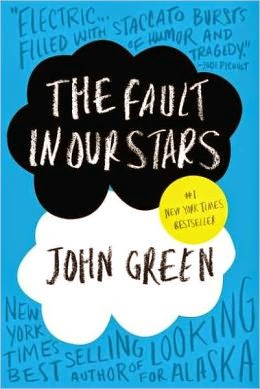
The Fault in Our Stars

This is crazy.  I usually avoid Young Adult books altogether, and now The Fault in Our Stars by John
Green is the second one I have read in two months.  And the second one that I have really liked! My granddaughter had recommended this one to me months ago, and while visiting at her house a few weeks ago I borrowed it from her and read it (in one day...a quick read).

It is, at appearances, a rather simple book, but I found great wisdom and compassion in the story.  The book is narrated by Hazel Grace, who at age sixteen, had thyroid cancer and was being kept alive by an experimental drug.  Hazel Grace had withdrawn from school a couple of years earlier to deal with her illness and, at her parents urging, began to attend a support group for young cancer patients.  Of course, the hard part of that was that the group members would always be in various stages of life/death.  The good part was that Hazel Grace met other kids her age who good be good support.  It was there that she met Augustus who had lost a leg to cancer.  The connection/attraction was immediate between them.

At the essence of the story is Augustus' concern about how he will be remembered...he wanted his life to have meaning.  Hazel Grace's concern was how her death would hurt her parents.

Without giving away the rest of the story, be assured that it is a beautiful one.

**My granddaughter makes this reading-obsessed grandmother proud!**

The Goldfinch

I waited awhile to read The Goldfinch, although I had it on my TBR list since it came out.  I usually prefer to read softcover books, thus I wait until they come out in soft cover.  But when I saw The Goldfinch sitting on a bookshelf at my daughter's house, I jumped on the opportunity to borrow it!  The Goldfinch, written by Donna Tartt, is a huge book...784 pages.  I will admit that I felt a little bogged down during the middle part of the book, but in hindsight, I felt like most of that part of the book was essential to the entire story, so I don't think that it could have been shortened much.

The story is narrated by 13 year old Theo Decker who lived in New York City with his mother.  His father had left the family, so it was just the two of them struggling to get by.  One morning, Theo's mother had an appointment at Theo's school to discuss Theo, so she kept him out of school and they went to the Metropolitan Museum while waiting to attend the appointment.  While visiting the museum, Theo caught the eye of a young girl who was also there with an older gentleman.  Theo told his mother he wanted to go to the gift shop for a bit (hoping to meet the girl), so his mother went off to see more paintings.  A few minutes later a horrific explosion occurred in the Museum.  Theo was knocked unconscious and went he woke, he began to find his bearings.  He came across the older gentleman who had been with the young girl.  The man was gravely injured, but was able to talk to Theo a bit.  He gave Theo an old ring to keep safe.  Theo eventually made his way out of the Museum never having been discovered by the rescue workers.  However, before he left the Museum, without consciously thinking about it, he took an old Dutch masterpiece called The Goldfinch that had survived the explosion.

The rest of Theo's life centers around The Goldfinch painting and his attempts to keep it safe and to ultimately find a way to return it.  With his father gone, he went to live with a friend's family, until some time later when his father, wiht ulterior motives, came to take him to Las Vegas to live with him.  There Theo meet Boris, who Theo follows into much trouble.

After living in Las Vegas for some time, circumstances arrived that made it necessary for Theo to leave there, and so he made his way back to New York, and let the ring he had been given lead him to his new life.

Keeping The Goldfinch painting safe was the purpose of Theo's life, from age 13 through adulthood. It seemed to become what he had left of his mother to him.

I found the very end of the book to be the most well-written.  There was a lot of philosophical thinking at the end.

"What if our badness and mistakes are the very thing that set our fate and bring us round to good? What if, for some of us, we can't get there any other way?"


It's a good book.  I have to agree with a friend of mine who said that she couldn't stop reading it, yet couldn't really tell you what was so good about it! Another sign of a good book...I thought about it a lot after I had finished it.

The Goldfinch won the 2014 Pulitzer Prize for Fiction and was also one of the New York Times Book Review's 10 Best Books of 2013.