Tuesday, April 21, 2020

The Immortalists

I loved The Immortalists by Chloe Benjamin.  It came out in 2018 and had been on my want-to-read list for a long time.  It was really a good story.


The Immortalists
In 1969, when the four Gold children were young, a friend of theirs told them about an old lady who could tell them the date of their death.  That summer the children were: Varya, age thirteen; Daniel, age eleven; Klara, age nine; and Simon, age seven.  They saved up their allowances in order to pay the woman to tell their fortunes. And so, one day the children went to the woman's apartment, entered individually, and learned the date of their death.

The book then tells the life of each of the Gold children, in order of their deaths.

A lot of the book resonated with me and my life.  As the oldest of four children, I have lost two of my younger siblings. One of the characters lived and died as one of my brothers did, so that was a bit hard for me to read, but it also brought back lots of good memories. And as Varya thought about the deaths of her siblings, she thought:

"She had lost parts of herself as she lost her siblings."

Very true.

This isn't a sad book, but it is a thoughtful book.  The lives of the four children were interesting. The Gold children's mother would make a good psychological case study!

The Zahir

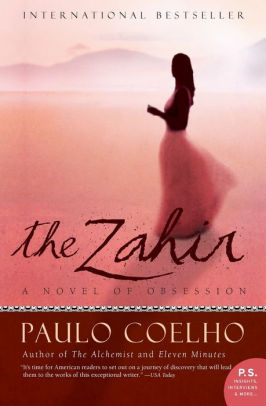
The Zahir by Paulo Coelho was a book that I had read about on a Bookaholics page on Facebook.  I loved the writing of this book. It is described on the front cover as "A novel of obsession".

The Zahir: A Novel of Obsession

I don't believe that the narrator of the story was ever identified by name.  He was a married man, a well-read author living in Paris with his wife, Esther, who was a war correspondent. Suddenly one day, Esther disappeared.  The police initially held the narrator in prison thinking that he had done something to her.  Everyone was trying to figure out was she kidnapped, was she murdered, or did she just leave her husband?  Esther had taken her passport and had been withdrawing money from their account, so it was eventually determined that she had left of her own free will.  It was also found that she probably had left with the younger man she had last been seen with.

The book is about the narrator's obsession with Esther, who in his mind called her "My Zahir".  He studied their life together, their past conversations, anything about her life that he could.  Eventually, the young man that she had been seen with came to see him and he became involved in the young man's life.  One night, as they were leaving the young man's group of friends, they had this conversation:

"I think that woman was right," I said.  "If you tell a story, then that means you're still not really free of it."

"I am free, but, as I'm sure you'll understand, therein lies the secret; there are always some stories that are 'interrupted,' and they are the stories that remain nearest to the surface and so still occupy the present; only when we close that story or chapter can we begin the next one."
When the young man finally told the narrator where Esther was, the narrator began the journey to find her.

I won't share the ending, but I will say that I was very moved by it.

The Tiger's Wife and The Overstory

The Tiger's Wife by Tea Obreht was quite popular when it came out in 2011,  but I did not have any interest in it at the time.  While in Alabama this past spring I came across it and bought it to read. 

The Tiger's Wife

The novel was an interesting read, but all in all, I didn't care for it.  I think perhaps that maybe I was not getting some symbolism in the book?  Maybe it would make a good read for a book group.  I was fairly lost with it.  The part I did understand was that Natalia's grandfather had died and she went back home to try to find out the circumstances of his death.  She came across a number of people in her search, each one as odd as the next.  Apparently, the main theme of the book was "the deathless man" and "the tiger's wife".  I just really didn't get it.  Maybe I was overthinking it?


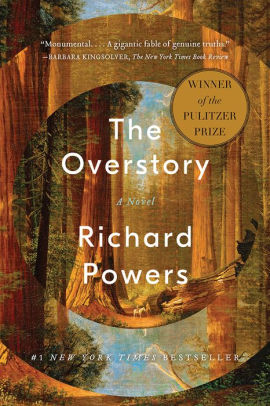
At the recommendation of a friend, I read The Overstory by Richard Powers.  I had never heard of it but learned that it had won the Pultizer Prize.  It came out in 2018.
The Overstory


It sounds funny, but I would describe this book as a book about trees.  Who wants to read a novel about trees?  But wait...it's about the story that trees have inside them....of the people who have loved and cared for them.  Fascinating way to write a story.  And it is a long book...just over 500 pages!  The stories easily capture the reader and tie somewhat together.  I loved this book!

Tuesday, March 24, 2020

4 Books-quick reviews

Over the past few weeks, I have read several books that I need to catch up on. Two of them, I read while on vacation and two of them after coming home. None were the best reads ever but were worth reading.

1) Secrets of Nanreath by Alix Rickloff: this is a historical novel that took place in two different time periods both in Cornwall England.  In 1913, Lady Katherine chose to move away from her life and family, and go off with a bohemian artist.  In 1943, her daughter, Anna, was assigned to Nanreath Hall, where her dead mother, Lady Katherine had been from.  Nanreath Hall had been taken over as a hospital and Anna was a nurse.  Anna was raised by a kindly couple and had very vague memories of her mother.  Being assigned to Nanreath Hall meant that perhaps Ann could begin to uncover her mother's past. It was an interesting, easy read.

2) Some Assembly Required by Anne Lamott: I really enjoyed this book.  It is a journal that the author had written as her only son became a first-time-father with a son.  It was especially touching to me as my only son was the same eighteen months ago! I love Lamott's writing in general anyway, and this was no exception!

3) The Kennedy Debutante by Kerri Maher: This was recommended by my daughter (as was Secrets of Nanreath) and was chosen by one of my book groups for our March read. [Sidenote: luckily we were able to meet before the self-isolation went into effect]. The book is a historical fiction novel about Kathleen "Kick" Kennedy, daughter of Joe and Rose Kennedy.  It was really a fascinating read about someone I pretty much knew nothing about.  Her life was incredibly interesting but terribly short.

4) The Forty Rules of Love by Elif Shafak: This was a book highly recommended by a book group on Facebook.  It was an interesting read, but I was not as enamored with it as others seemed to be.  It is set in two different time periods: the thirteenth century and in 2008.  I rather enjoyed the story that was set in the 1200s which was about the great poet Rumi meeting his mentor Shams of Tabriz which apparently is all true.  The story set in 2008 I found rather simple, about an unsatisfied housewife named Emma who lived in New England. She had been sent a manuscript from her employer to review.  It was by an unknown author and the package included a postcard from the author in which he briefly described the novel that was based on Rumi and Shams.  Ella began an email correspondence with the author and you can probably guess the rest of that.  So this novel is a 50/50-I enjoyed parts of it and didn't enjoy other parts of it.

Thursday, February 20, 2020

Disappearing Earth and The Rabbit Girls

Disappearing Earth,  by Julia Phillips, was presented, but not chosen, at one of my book groups.  It sounded fascinating to me so I read it.  And it was fascinating!

Disappearing Earth

This novel is a story about two young girls who were kidnapped in Kamchatka, a remote region in Russia.  The novel takes place over the year after the girls were taken.  Each chapter is told month-by-month after the abduction and is about different, but connected loosely to the story, women from the same region.  After a while, the story began to mesh and build up to the last month of that year.  The ending of the story was quite satisfying.

This novel stayed with me for a long time.  It is a crime story, but the social implications were really interesting.  In this remote region, men were portrayed as dangerous and the women as too strong for the men to value.

I got The Rabbit Girls, by Anna Ellery, from the library as it was also a book that I had heard about and wanted to read.  There were a few things that I did not care for or found hard to believe in the book, and those things distracted me.  I'll get to those soon.

The Rabbit Girls

The story takes place in 1989 when the Berlin Wall was first opened.  Miriam came to Berlin to care for Henryk, her dying father from whom she had been estranged.  Her mother had died, and Miriam was their only child.  After Miriam arrived to stay and care for her father, he began crying out for "Freida".  Miriam had no idea who that was.  Soon Miriam discovered numbers tattooed under her father's watchband and she realized that he had been in Auschwitz.  She had no knowledge of that fact.  Miriam began looking around the apartment to see if she could learn more about her father's history and in her mother's closet, she came across a dress that was from Ravensbruck.  And within the seams of that dress, Miriam discovered love letters from Freida to Henryk that had never been sent or seen by anyone.

Are you picking up on any distractions here?  Like is it believable that Miriam grew up never seeing the tattoo on her father's wrist?  Or that her mother kept Freida's dress and never told anyone?

I did enjoy the reading of the letters that described not only their love but of life in the camp.  But here's my biggest complaint-the Rabbit Girls were only mentioned briefly in Freida's letters.  The book was not about the Rabbit Girls.  That was very misleading to me.

I also found the end of the story very predictable.

So, I guess that I'm not really recommending this book.  Or am I?  I don't even know.


Monday, February 10, 2020

Ask Again, Yes

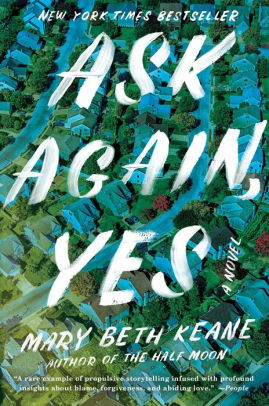
I got Ask Again, Yes by Mary Beth Keane from my local library.  I was glad that I hadn't bought it...I enjoyed the book, but by the end of it, I was feeling rather let down. It was the psycho-therapist in me.

Ask Again, Yes

The novel was a good story.  Two police officers from the NYPD both unwittingly moved next door to each other in a small suburb of New York city.
Francis was married to Lena with two young daughters, and Brian was married to Anne, and they had lost their first child.  Anne appeared to be quite temperamental and difficult to engage.  Soon after the move, both women became pregnant and Anne continued to appear to continue to disengage.

Lena and Francis' baby was a girl named Kate, while Brian and Anne's baby was a boy named Peter.  Kate and Peter grew up as neighbors and were best friends, although Peter's mother did not like that Peter had anyone close to him.  As they grew older, the relationship continued to intensify.  That seemed to drive Anne over the edge and one night a horrific event occurred that changed both families lives forever.

The novel does a good job at portraying the two very different families, one very stable, the other quite disturbed.  It begins to end interestingly, but I was bothered by Kate and Peter's relationship as they were older.

It was a good read, but not a keeper (obviously since it's from the library-ha!).


Saturday, February 8, 2020

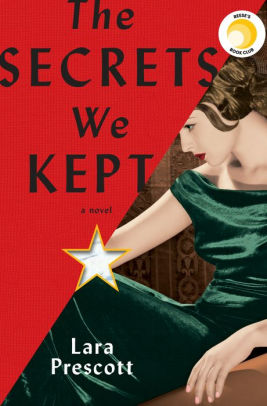
The Secrets We Kept

The Secrets We Kept by Laura Prescott was a fascinating book.  It is a debut novel by the author which is incredibly impressive to me.  The novel was inspired by the true story of how the book Dr. Zhivago was handled during the Cold War.  It was very interesting.

The Secrets We Kept

There are several main characters: Irina, the American daughter of Russian parents, who was hired to work in the typing pool at the CIA in the 1950's; Sally who was to train Irina to be a spy, and fell in love with her; Olga, who was the mistress of Boris Pasternak (the author of Dr. Zhivago); and Boris Pasternak.

The juxt of the story is America trying to get the book Dr. Zhivago out of Russia.  Reading this book made me want to re-read Dr. Zhivago, which I read years and years ago.  And mixed in are the love stories of Irina and Sally, and Olga and Boris.

Really good book!